RNA Umpires are required to have a current pass in the Rules of Netball theory exam.
NSG Umpires Can/Should:
Have FUN– try and make the game as enjoyable and educational as possible for the players and umpires
Be an adult or a minimum of 15 years (in the year they are umpiring NSG)
Wear the fluoro vestand suitable sports shoes and attire and use the hand held whistle.
Check for NO jewelleryincluding no Fitbits and no taping of earrings; hair must be appropriately tied back
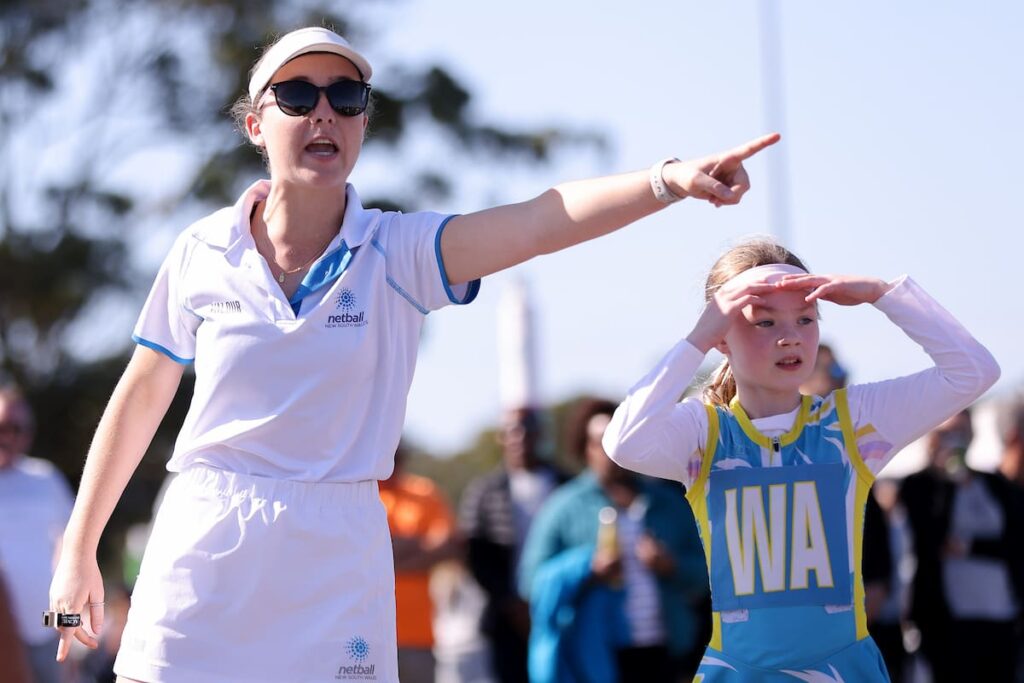
Be the on-court Coach, facilitating the game and encouraging players in a fair and equal manner
Check the ball and help the captains ‘toss’ for first centre pass and goal end – scissor, paper, rock is OK
Move parents, coaches, kids off the end/goal lines and at least 1 metre away from the sidelines during the game
Keep track of alternating centre passesand note teams only change ends at half time
Try to have a consistent interpretationof the NSG rules (this interpretation may change slightly based on the skill level/age of the players)
Use common sense, particularly in a one sided game. If a player (on the losing team) makes a mistake don’t necessarily take the ball off them, show/tell them what they need to do and let them try it again. This is especially important for younger players who are clearly new to netball
Umpires should be generous, use their discretionand give equal benefit of the doubt for footwork, replay, fumbled catches, dragging of the landed foot, tiny offsides etc
Let the game flow with more encouragement than whistle, especially if there are no major mistakes
Talk to and guide playersthroughout the game with an instructional approach given equally to both teams
Use a loud voice giving short, simple tips, eg, ‘feet still’, ‘you can shoot’, ‘hands up’, ‘big pass’, ‘move back’, ‘find some space’, ‘stay behind the line’, ‘stay in your area’ etc
Help the players byshowing them what they should be doing, where they should be standing and who should take the throw ins, free passes etc
Keep up with the balland position themselves away from the spectators
Blow the whistle loudlyfor all centre passes, goals, throws in, infringements etc
Make a prompt decisionfor 50/50 balls (dual possession) and alternate that decision on other occasions
Ensure throw insare taken from outside the court (toes up to and behind the line) with feet still and by the correct player, eg, the GK always takes a defensive goal third throw in, WD/GD take Centre Third throw ins
Grab the match ballafter a goal is scored and encourage all players to move back to starting positions quickly
Use only team names and the position names, eg, Goal Attack, Centre etc, not children’s names,particularly if it is your daughter – try to remain neutral
Acknowledge their duty of carefor their players’ safety and stop the game to deal with an injury or other issue
Follow these steps for all infringements: blow whistle, stop play, briefly explain the rule, demonstrate the correct technique/position/distance and let play continue
Ensure all players shake hands*at the end of the game (* current exclusions in place)
NSG Umpires Can't/Should'nt:
Overthink it
Penalise (take a ball off away from) a player who had made really good effort to follow the rules
Use their own players’ names or encourage/instruct/praise their own team over their opposition
Take toss ups (in the case of dual possession or a 50/50 ball; instead make a prompt decisionand alternate that decision on other similar occasions)
Use lengthy description or explanations and in so doing hold up the game
Count down ‘5, 4, 3, 2, 1’ while a player is trying to pass the ball. (Instead, if there is a player really struggling to throw the ball use words like ‘big pass to your C’, ‘help your player’, ‘make space’, ‘throw into space’)
Put any player ‘out of play’
Engage with an angry parent or spectator or let sideline ‘commentary’ distract them
NSG Players Can/Should:
Have FUN– win, lose or draw
Listen to the umpire
Pass the ball within 5 seconds
Lean on the ball to gain balance
Bounce the ball once and then catch it
Pick up the ball from an offside location
Chase a ball push it down to the ground to stop it then pick it up
Catch the ball, fall over and stand up again without stepping too much
Roll the ball towards herself (but cannot roll the ball to another player)
Attempt to shoot a goal from anywhere within the goal circle
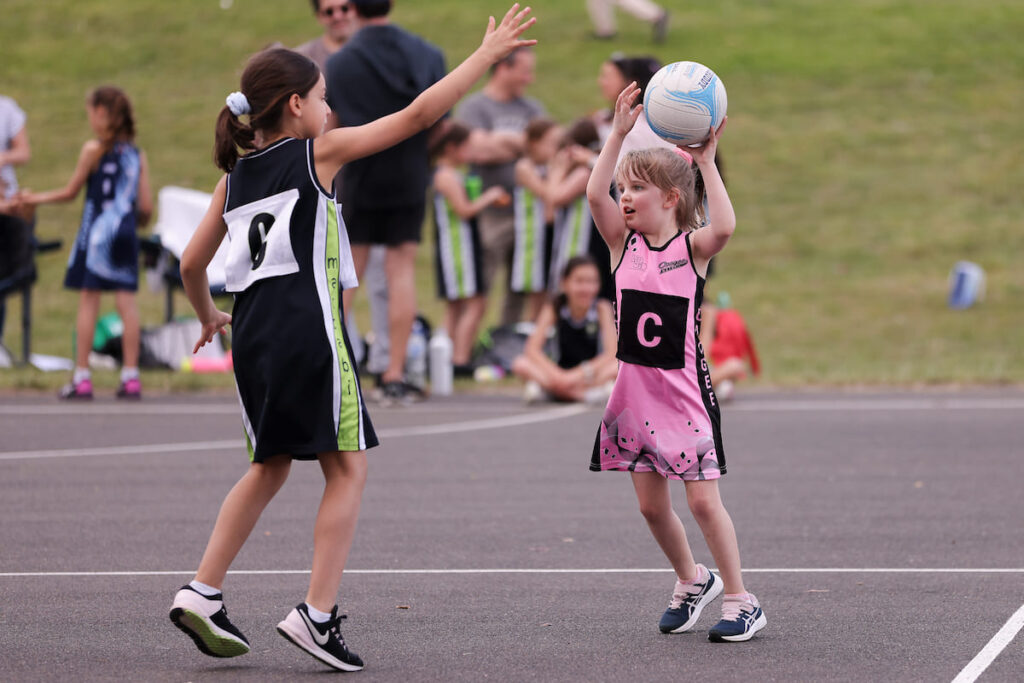
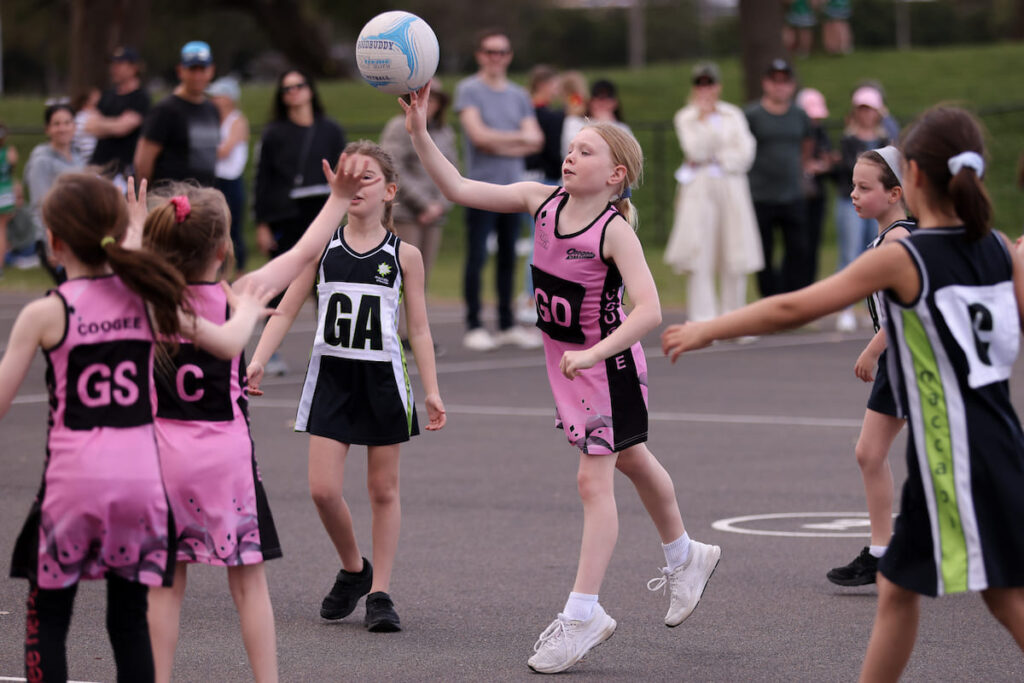
Defend another player, one on one with arms up, only if they are is 1.2 metres/4 feet from the thrower’s landing foot. This equates to 4 big steps (or 4 rulers back) from the opposition, measured shoe to shoe
Throw the Centre Pass only if they are standing inside the centre circle
At a Centre Pass wait behind the line until the whistle is blown, then run forward into the centre third
Catch or touch a Centre Pass only if standing in the centre/middle third
Take a throw in with toes behind the line and stay behind the line with feet still until they release the ball
Only change ends at half time
Play all seven positions throughout the season; play a minimum of 2 positions per game
Shake hands at the end of the game and show excellent sportsmanship.
NSG Players Can't/Should'nt:
Wear jewellery of any kind, including earrings, anklets, string friendship bracelets etc
Run or walk with the ball
Roll the ball to another player
Dive on the ball to gain possession (the ball should be given to the opposition player and it explained to the players that it is dangerous and not rugby!)
Get possession of the ball while on the ground
Kick the ball
Snatch the ball out of a player’s hands, if she is already holding it
Enter the court or step at a throw in until the ball is passed to another player
Throw the ball at/against another player
Use elbows, knees, shoulders or any other part of the body, deliberately or accidently, to make contact in a way that interferes with play
Put their arm/s across their opposition player’s body, or entangle their feet between a player’s feet/legs, especially around the goal circle or on the transverse line
Run into or ‘through’ another player, accidentally or deliberately
Stand closer than 4 feet/1.2m (shoe to shoe) with arms up
Hold onto their partner’s body or clothing
Use any tactics or movements that are considered contact and/or obstruction so as to interfere with their opposition, with or without the ball. (The umpire can say ‘no bumping C’, ‘keep your elbows in GD’, ‘it’s not rugby’, ‘move back GD’, ‘too close WA’ etc, or blow the whistle and talk to the players if any actions are becoming rough or there is potential for injury.)
Wave their hands in another player’s face or near her eyes
Catch a ball from the Centre Pass in the goal third
At a shot for goal, re-catch/replay the ball until it has touched the ring, net, post, padding or another player, i.e., an ‘air ball’. If she does re-catch/replay the ball it is given to the opposition for a free pass. HOWEVER umpires should use common sense on some of the minor rules, particularly in a one sided game; a player/team may be given ‘another try’ if they have had very few attempts at goal or have had very little possession of the ball during the game